Intention Statement
Science teaching at St Mary’s aims to give all children a strong understanding of the world around them whilst acquiring specific skills and knowledge to help them to think scientifically, to gain an understanding of scientific processes and also an understanding of the uses and implications of Science, today and for the future.
Implementation
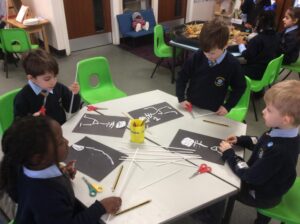
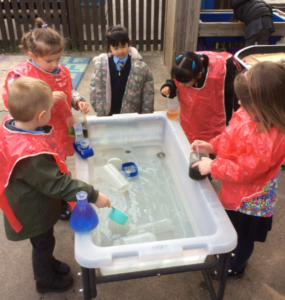
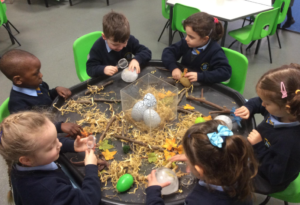
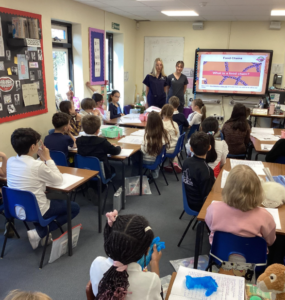
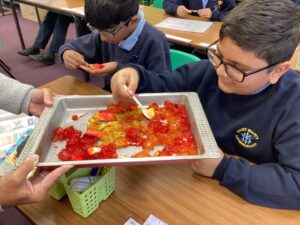
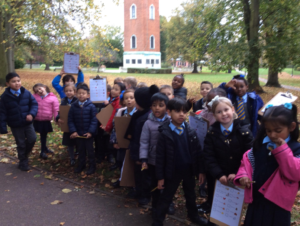
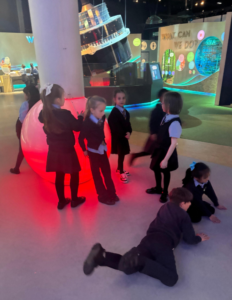
At St Mary’s Science is taught as a stand alone subject, split into the strands of biology, chemistry and physics, with links being made to other areas of the curriculum where possible. Teachers ensure that scientific experiences are enhanced through the use of a range of physical resources, half termly experiment assessments and science based trips – such as a visit to the Space Centre. Vocabulary is also given a central focus due to the high EAL percentage of the children to our school. This will be evident on all classroom displays.
St Mary’s follows the National Curriculum for science in all year groups to enable children to make good progress from EYFS to Year 6, guided by the Lancashire Curriculum Planning grid. Teachers make links to knowledge acquired in previous year groups explicit and adapt lessons so that all children can participate and reach end of year expectations. Working scientifically is taught throughout each unit of work with ample opportunities for children to use their reading skills in research and their mathematical skills when measuring, recording and analysing data.
Impact
The Science curriculum at St Mary’s Catholic Primary School has a meaningful and observable impact on pupils’ knowledge, skills and attitudes, ensuring they grow into curious, confident and scientifically literate learners.
As a result of a well-planned and progressive Science curriculum:
Pupils develop a deep and retained understanding of key scientific concepts across biology, chemistry and physics, enabling them to explain phenomena about the natural and physical world with increasing accuracy as they progress through school.
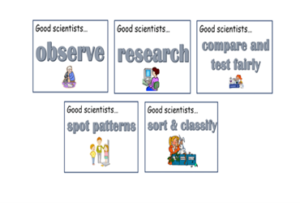
Scientific skills are embedded and built over time. Children become competent in planning and conducting investigations, making predictions, recording and analysing data, and drawing evidence-based conclusions, demonstrating meaningful progress in the skills of ‘working scientifically.’
Pupils confidently use scientific vocabulary to communicate their understanding effectively in both written and oral forms, reflecting an enriched subject language that supports learning across the curriculum.
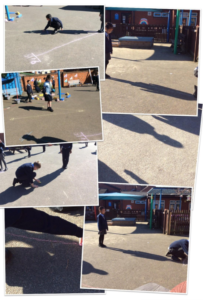
Engagement and enthusiasm for Science are evident. Through practical experiments, enquiry-based learning and enrichment opportunities such as science-based trips, pupils show curiosity, persistence and enjoyment in exploring scientific ideas and asking meaningful questions.
Learning progress and attainment are monitored effectively. Through teacher assessment and regular opportunities to revisit and apply previous learning, pupils achieve age-related expectations and are well prepared for future science learning.
Science learning supports wider academic development. Strong foundations in scientific knowledge and critical thinking contribute to pupils’ broader understanding of the world and support achievement across other subjects.
Overall, the impact of the Science curriculum at St Mary’s is that pupils become inquisitive, knowledgeable and resilient learners with the skills and confidence to explore scientific concepts and apply their understanding thoughtfully in real-world contexts.
Documentation
Science LTP: CLICK HERE
Science at St Mary’s
Key Learning In Science Year 1
Key Learning In Science Year 2
Key Learning In Science Year 3
Key Learning In Science Year 4
Key Learning In Science Year 5
Key Learning In Science Year 6
Science Policies and Documentation
Science Experiment Web Links
http://www.bbc.co.uk/schools/scienceclips/index_flash.shtml
http://www.bbc.co.uk/schools/websites/4_11/site/science.shtml
http://www.sciencekids.co.nz/experiments.html
https://sciencebob.com/category/experiments/
*Safety – Please do not try any experiments without adult supervision.
Science Songs
Have fun and further your learning!
FAO: Science Co-ordinator: Mrs Hill